Heating oil sits in your tank for weeks or months at a time. Over the years, sediment and other material can settle at the bottom, forming a layer commonly described as sludge.
Because this build up is hidden inside the tank, you may not see it directly. Instead, the first warning can be a blocked filter, unreliable heating or a boiler that keeps locking out.
These symptoms do not always mean there is sludge in your tank. Many heating faults have other causes. However, recurring problems can be a reason to have the tank and fuel supply checked by a qualified professional.
What is heating oil tank sludge?
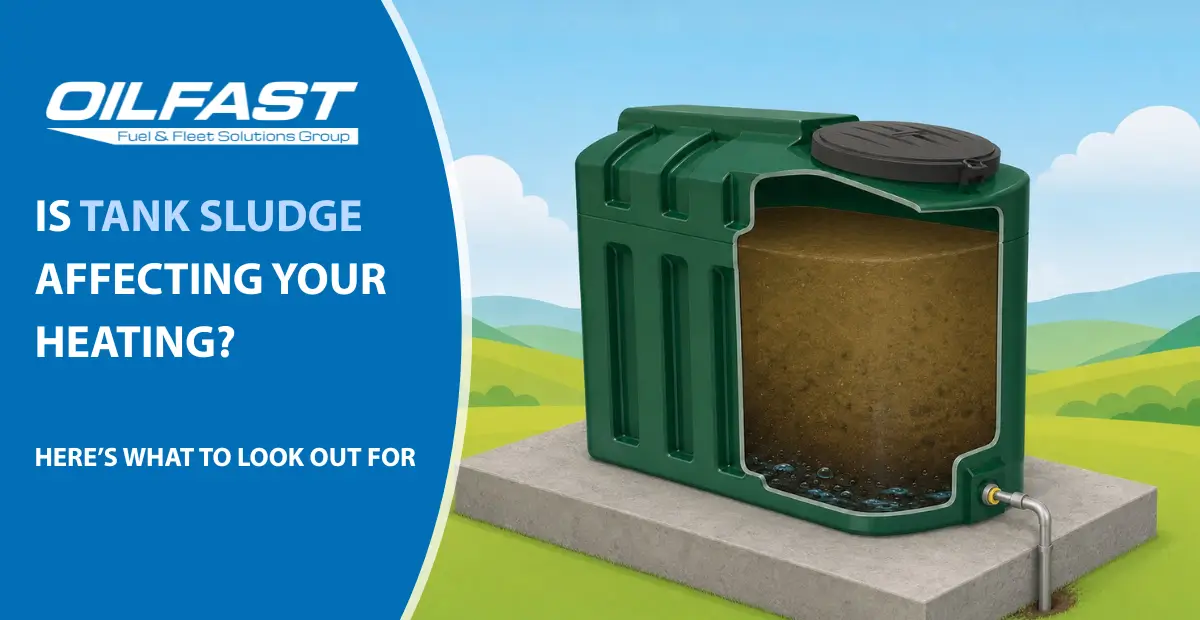
Heating oil tank sludge is the dark residue that can accumulate at the bottom of a tank over time. It may contain sediment, rust or other debris, along with material created as fuel ages. Water in the tank can also contribute to conditions in which microbial growth develops.
As the sludge normally settles below the usable oil, it can remain unnoticed for a long time. Problems can arise if it reaches the tank outlet and begins to move through the fuel supply towards the boiler.
Water is one possible contributor, but it is a separate subject with its own causes and warning signs. For more information, read our guide to water in your heating oil tank.
Warning signs of sludge in a heating oil tank
No single symptom proves that sludge is present. The pattern matters: a fault that returns, a filter that repeatedly blocks or several symptoms appearing together gives you more reason to investigate.
Your oil boiler keeps locking out
A boiler lockout is a safety feature that stops the appliance when it detects a fault. If sludge or debris restricts the oil supply, the burner may not receive the steady flow of fuel it needs and the boiler could lock out.
There are many other reasons for a lockout, so one occurrence does not confirm a problem in the tank. Avoid repeatedly pressing the reset button. If the boiler will not restart in accordance with the manufacturer’s instructions, or it locks out again, contact a qualified heating engineer.
The oil filter becomes blocked repeatedly
The filter is designed to stop unwanted material from reaching sensitive parts of the heating system. A filter that needs attention much more often than expected can therefore be a stronger sign that debris is entering the fuel supply.
Replacing or cleaning the filter may restore the heating temporarily, but it will not solve an underlying build-up in the tank. Ask the engineer what was found in the filter and whether the fuel line and tank should also be inspected.
Your heating becomes unreliable
Restricted fuel flow may cause intermittent starting, uneven operation or a loss of heating and hot water. You might find that the boiler works for a time and then stops again.
These symptoms can also be caused by an appliance fault, air in the fuel line or simply running out of oil. An engineer should diagnose the whole fuel supply and heating system rather than assuming sludge is responsible.
Fuel line or burner problems keep returning
Material drawn from the tank can contribute to restrictions in the fuel line and place extra strain on components involved in delivering and burning the oil. If a similar fault returns after an earlier repair, the problem may extend beyond the boiler itself.
Tell the engineer about any previous work and how quickly the fault came back. That history can help them decide whether the tank, filter and fuel line need to be assessed together.
Problems begin shortly after a delivery
When heating oil is delivered into a tank, the movement of the fuel can disturb sediment that was already settled at the bottom. If that material reaches the outlet, a filter or fuel line problem may become apparent soon afterwards.
The timing alone does not mean the delivered oil was contaminated. The fault may be linked to existing residue in the tank, a low pre delivery fuel level or an unrelated boiler issue. Note when the symptoms started and contact a heating engineer for a diagnosis. If there is a concern about the delivery itself, contact Oilfast with the delivery details so the circumstances can be reviewed.
Tip: Where practical, allow the oil time to settle after a delivery before running your heating again, particularly if the tank was very low beforehand. This can reduce the chance of disturbed sediment being drawn into the fuel supply.
An engineer finds dark residue or debris
The clearest indication may come during servicing or fault finding. An engineer might find dark residue, particles or rust coloured material in a filter or other part of the fuel supply.
That does not tell you the full condition of the tank on its own, but it is a sound reason to discuss a professional tank inspection. Depending on what is found, a specialist may recommend cleaning the tank, treating or recovering the fuel, or addressing deterioration in the tank itself.
How can sludge affect your heating system?
Sludge becomes a practical problem when it moves beyond the bottom of the tank. It may restrict the tank outlet, collect in a filter or reduce the flow of oil through the fuel line. If too little fuel reaches the burner, the boiler may operate poorly or lock out.
Continuing to run the system without addressing the cause can lead to repeated call-outs and place avoidable strain on components. Finding out where the restriction originates is therefore more useful than dealing with each symptom in isolation.
What should you do if you suspect tank sludge?
Do not try to enter, clean or remove fuel from the tank yourself. Heating oil must be handled and disposed of correctly, and disturbing settled material could make the problem worse.
Instead:
- Avoid repeatedly resetting a boiler that continues to lock out.
- Check the tank’s external gauge, if it has one, to make sure you have not simply run out of oil.
- Note when the fault began, whether it has happened before and whether it followed a delivery.
- Contact a qualified heating engineer to diagnose boiler, filter or fuel line faults.
- Arrange an assessment by a competent tank specialist if the findings suggest sludge or damage inside the tank.
- Contact your local depot if you have a specific concern relating to a recent delivery.
You should also act promptly if you notice an oil smell, staining, a sudden drop in the tank level or visible damage. These may indicate a leak rather than sludge. Keep people and animals away from the affected area, avoid ignition sources and seek professional advice.
Who should you contact?
The right person depends on where the problem appears to be.
A qualified heating engineer can investigate boiler lockouts, filters, fuel lines and burner faults. An OFTEC-registered technician can also advise on oil fired heating equipment and tank related work within their scope of registration.
If sludge is suspected inside the tank, you may need a specialist who can inspect it and advise whether professional cleaning, fuel recovery or tank replacement is appropriate. Do not arrange a refill as a way of covering or diluting sludge before the issue has been assessed.
When you call, it helps to have the following information ready:
- The date and quantity of your latest delivery
- The approximate tank level before the delivery
- What the boiler is doing and when the problem began
- Whether the boiler, filter or fuel line has had similar faults before
- Any findings or photographs provided by your engineer
Do recurring heating faults need a closer look?
One boiler lockout does not prove that your heating oil tank contains sludge. However, repeatedly blocked filters, returning fuel supply faults or residue discovered during servicing should not be ignored.
A professional assessment can identify whether the problem is in the boiler, the fuel line or the tank and help prevent the same fault from returning.
If you have a question about a recent heating oil delivery, contact the Oilfast team on 03302 320 104. For a boiler fault or suspected tank problem, speak to a suitably qualified heating engineer or tank specialist.