
After several spells of unusually hot weather across the UK, you may be wondering whether high temperatures can affect the heating oil stored outside your home.
The reassuring answer is that heating oil does not normally spoil or become unsafe simply because the weather is hot. Domestic oil tanks are designed to remain outdoors throughout the year and should cope with normal seasonal changes.
However, prolonged heat and strong sunlight can highlight existing weaknesses in an older tank. Warmer weather can also contribute to condensation and small changes in the volume of the oil, making summer a sensible time to check the condition of your tank.
Does heating oil expand in hot weather?
Like most liquids, heating oil expands slightly as it gets warmer. A correctly filled and properly maintained tank should have enough space to allow for this normal movement.
This is one reason an oil tank should never be filled beyond its safe working capacity. Your heating oil supplier will leave sufficient space in the tank when making a delivery.
Expansion should not cause a problem in a sound tank. However, contact a qualified heating engineer if you notice:
- The sides of the tank bulging or changing shape
- Oil around the tank, pipework or fittings
- Cracks or splits in a plastic tank
- Rust or corrosion on a steel tank
- A strong or unusual smell of oil
Do not attempt to repair a damaged oil tank yourself.
Can hot weather cause condensation in an oil tank?
Condensation can form when changes in temperature cause moisture in the air inside a tank to collect as water droplets.
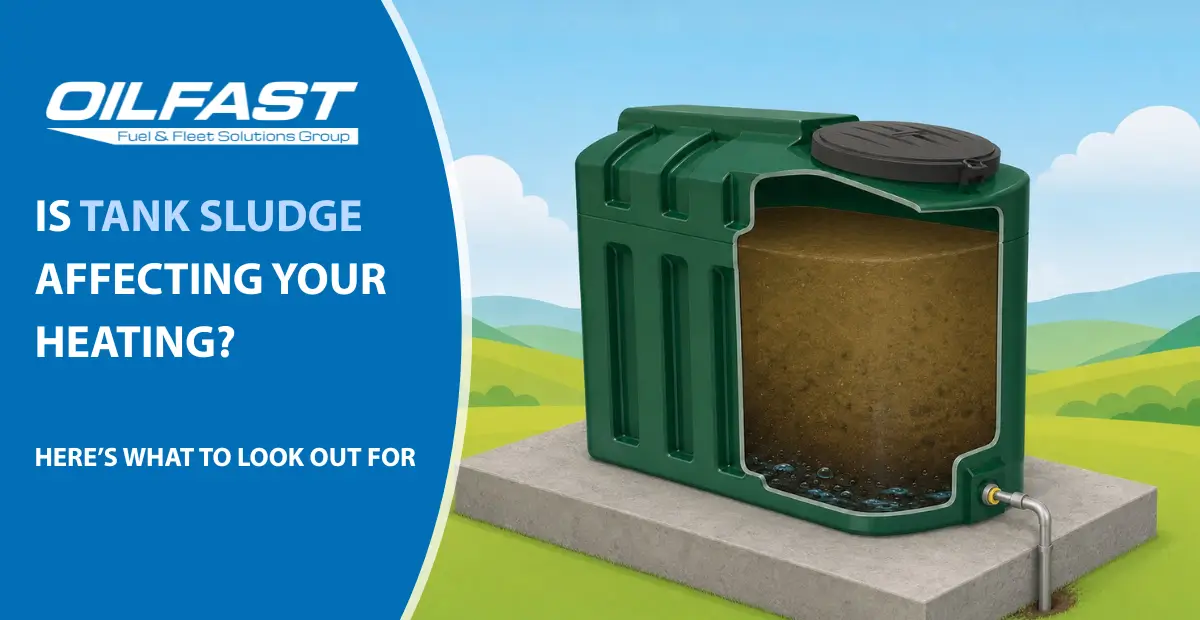
This is more likely to become an issue when a tank contains a large amount of empty space, as there is more air inside it. Over time, water can collect at the bottom of the tank because it is heavier than heating oil.
A small amount of condensation will not necessarily cause an immediate problem. However, a build-up of water can affect the quality of the fuel, contribute to corrosion in steel tanks and potentially reach your heating system.
Keeping an eye on your oil level and having your tank inspected regularly can help identify water before it causes a larger problem.
Does sunlight damage a heating oil tank?
Modern bunded heating oil tanks are designed for outdoor use, but years of exposure to sunlight and changing weather conditions can gradually affect their condition.
Hot weather does not usually damage a healthy tank overnight. The greater concern is the combined effect of age, UV exposure and repeated temperature changes over many years.
Check for warning signs such as:
- Fading or discolouration
- Cracks, splits or deep scratches
- Bulging or distortion
- Weakness around lids, gauges and fittings
- Damp patches or an oily smell nearby
Avoid placing temporary covers directly over your tank or enclosing it without professional advice. Ventilation and safe access are important, particularly when your heating oil is delivered.
If you are concerned about the tank’s position or exposure to sunlight, ask a qualified oil heating professional to assess it.
Can heating oil go off during a heatwave?
A few hot days will not make heating oil go off. When stored correctly in a clean, secure and well-maintained tank, heating oil can remain usable for an extended period.
Water, dirt and other contamination are more likely to affect its condition than warm weather alone.
Summer heating oil usage is usually much lower than it is during winter, so fuel may remain in the tank for longer. This makes it important to check the tank periodically, even when your heating is switched off.
Should you keep your heating oil tank full in summer?
You do not need to completely fill your tank because a heatwave is forecast. However, allowing the level to remain extremely low for a long period can leave more space for condensation to form.
A low level also increases the risk of running out when you begin using your heating again.
Summer can be a useful time to review how much oil you have and order before autumn demand begins. Just remember that the tank must have sufficient room for a safe delivery and should never be overfilled.
How to check your oil tank after hot weather
Once the weather is cooler, take a few minutes to look at your tank from a safe distance.
Check the tank body, visible pipework, gauge and surrounding ground. Look for changes in shape, cracks, rust, damp areas or signs of oil. Do not climb onto the tank or press against its sides to test its strength.
Oil tanks should be checked regularly and professionally inspected each year. UK government guidance also recommends checking for damage or leaks at least once a month.
If you discover a leak, keep people and pets away, avoid touching the oil and contact a qualified professional as soon as possible.
Keeping your heating oil safe through summer
Recent 2026 summer temperatures have reached the high 20s in parts of Scotland, while the UK has experienced several periods of heatwave conditions. The hot weather is unlikely to cause a sudden problem with a healthy heating oil tank, but it provides a useful opportunity to check for existing wear or damage.
The most important steps are simple:
- Check your tank regularly
- Monitor your heating oil level
- Look out for cracks, bulging, rust or leaks
- Arrange an annual professional inspection
- Seek advice if anything has changed
A few straightforward checks can help keep your heating oil stored safely and your system ready for when colder weather returns.
Oilfast delivers heating oil to homes across Scotland. Get a quote online or speak to your local Oilfast team to arrange your next delivery.